Early Years Curriculum
Freedom to explore, space to grow
The Early Years curriculum at St Chris provides a strong foundation for learning while recognising that pupils develop at different rates during these important first years of school.
Our Nursery and Reception classes follow the Early Years Foundation Stage (EYFS), combining structured teaching with exploration, creativity and outdoor learning. This balanced approach supports both academic progress and personal development, helping pupils grow in confidence as learners from the very beginning.
A Carefully Structured Start to Learning
Across Nursery and Reception, pupils develop essential skills in:
- communication and language
- early reading and writing
- mathematics and number understanding
- physical development
- personal, social and emotional confidence
- understanding the world
- expressive arts and creativity
Learning takes place through a combination of whole-class teaching, small-group sessions and child-initiated learning, allowing staff to respond carefully to each pupil’s stage of development.
Nursery Curriculum Information 2025-6
Reception Curriculum Information 2025-6
Learning Through Play and Discovery
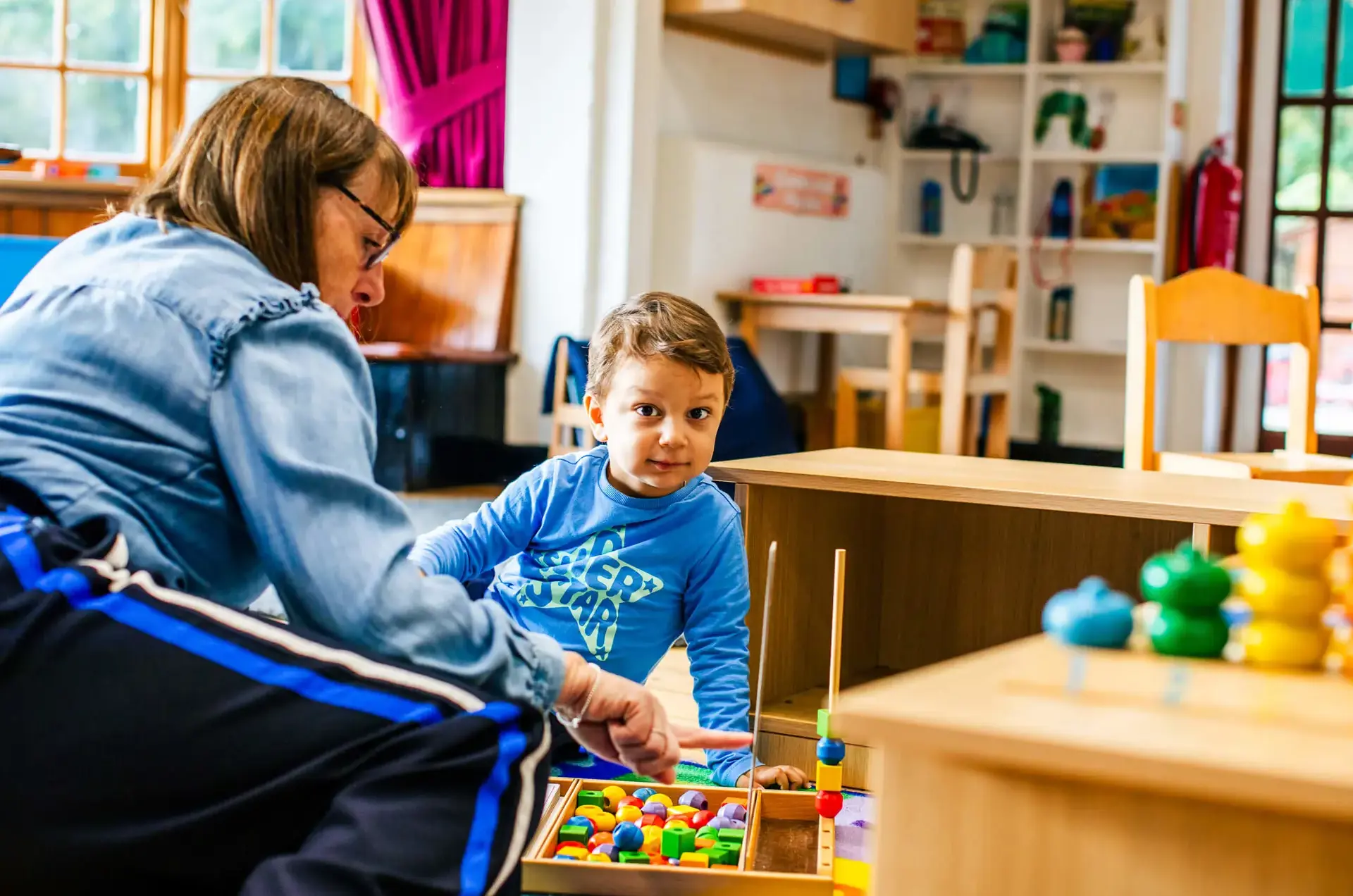
Child-initiated learning is a central part of the Early Years experience at St Chris.
During these sessions, pupils choose from a wide range of carefully planned activities across indoor and outdoor environments. Adults support learning through observation, conversation and guidance, helping pupils deepen their understanding and extend their thinking.
This approach develops independence, persistence and curiosity — qualities that support long-term success in school.
Early Reading, Writing and Communication
Language development sits at the heart of the Early Years curriculum.
Pupils take part in daily phonics sessions and guided reading activities that support early decoding, comprehension and confidence with books. Alongside this, pupils begin to develop early writing skills through mark-making, sentence construction and storytelling.
Rich conversation, shared stories and structured talk help pupils express their ideas clearly and develop confidence in communicating with others.
Mathematics Through Exploration and Understanding
Mathematical learning begins with practical experience.
Pupils develop confidence with number through counting, number composition and early calculation, alongside work on shape, pattern, measure and comparison. Activities are designed to build reasoning skills and encourage pupils to explain their thinking as they learn.
Structured mathematics teaching ensures Reception pupils are well prepared for Year 1 while allowing younger pupils to develop secure foundations at their own pace.
Learning Beyond the Classroom
Pupils benefit from specialist teaching across the week, introducing them to the wider life of the Junior School from the start.
Early Years pupils take part in:
- Forest School sessions in the natural environment:
- swimming lessons in the indoor school pool
- music with specialist teachers
- French through games, stories and conversation
These experiences support physical coordination, creativity and language development while helping pupils feel part of the wider school community.
| Forest School |
|---|
|
At St Chris, our Early Years pupils enjoy weekly Forest School sessions led by a trained Forest School teacher. These sessions nurture curiosity, confidence and independence through hands-on experiences in the natural world – in every season and all weathers. Through play and exploration, our youngest learners' develop teamwork, problem-solving and self-regulation skills while building a lasting connection with nature. They expand their vocabulary, engage in sensory discovery, and practise practical skills such as handling ropes and sticks, pulling, pushing and twisting. Pupils also begin to notice patterns and cycles in the environment and are introduced to the basics of fire awareness, all within a safe and supportive setting. Forest School is rooted in respect for each child’s ability to explore, question and grow – laying strong foundations for their learning journey. |
| Music |
| We have a passionate music team that nurtures creativity, self-expression and confidence through musical experiences. Pupils explore the magical world of sound and rhythm, developing an early appreciation for music through singing, playing instruments and movement. |
| Swimming Lessons |
|
One of the early principles of St Chris was that all pupils – even our youngest – should develop their ability to swim for both safety and enjoyment reasons. Pupils enjoy weekly lessons in our on-site indoor pool, led by certified instructors where they build water confidence and essential swimming skills in a safe and supportive environment and instil a lifelong love for physical activity through the joy of swimming. |
Planning and Observing
We use Tapestry as an online learning journal to observe and record pupil progression during their time in Early Years. Each pupil is observed individually and in an ongoing way, enabling us to make informed decisions about how best to support their learning. It also helps us track them against the EYFS framework, enabling us to ensure that their developmental progression is supported.
You will be invited to two parents’ evenings a year, and you will also receive two school reports throughout the year. The Early Years team are also available to speak to at drop off and pick up and can be contacted for an appointment at any point during the year.
Learning Together, Progressing Individually
Nursery and Reception pupils share many elements of the Early Years environment, including outdoor learning, creative activities and topic-based exploration.
Teaching in phonics, literacy and mathematics is carefully differentiated through small-group work so that learning remains appropriately challenging for each pupil. This ensures Reception pupils are well prepared for the transition into Year 1 while younger pupils continue to build confidence and independence.
Preparing for Year 1
Throughout Reception, pupils receive focused preparation for the next stage of their education through structured phonics teaching, guided reading, early writing and mathematics.
Progress is monitored carefully through regular observation and assessment, ensuring each pupil moves into Year 1 with secure foundations and a positive attitude to learning.
Most importantly, pupils leave Early Years already confident members of the Junior School community.